
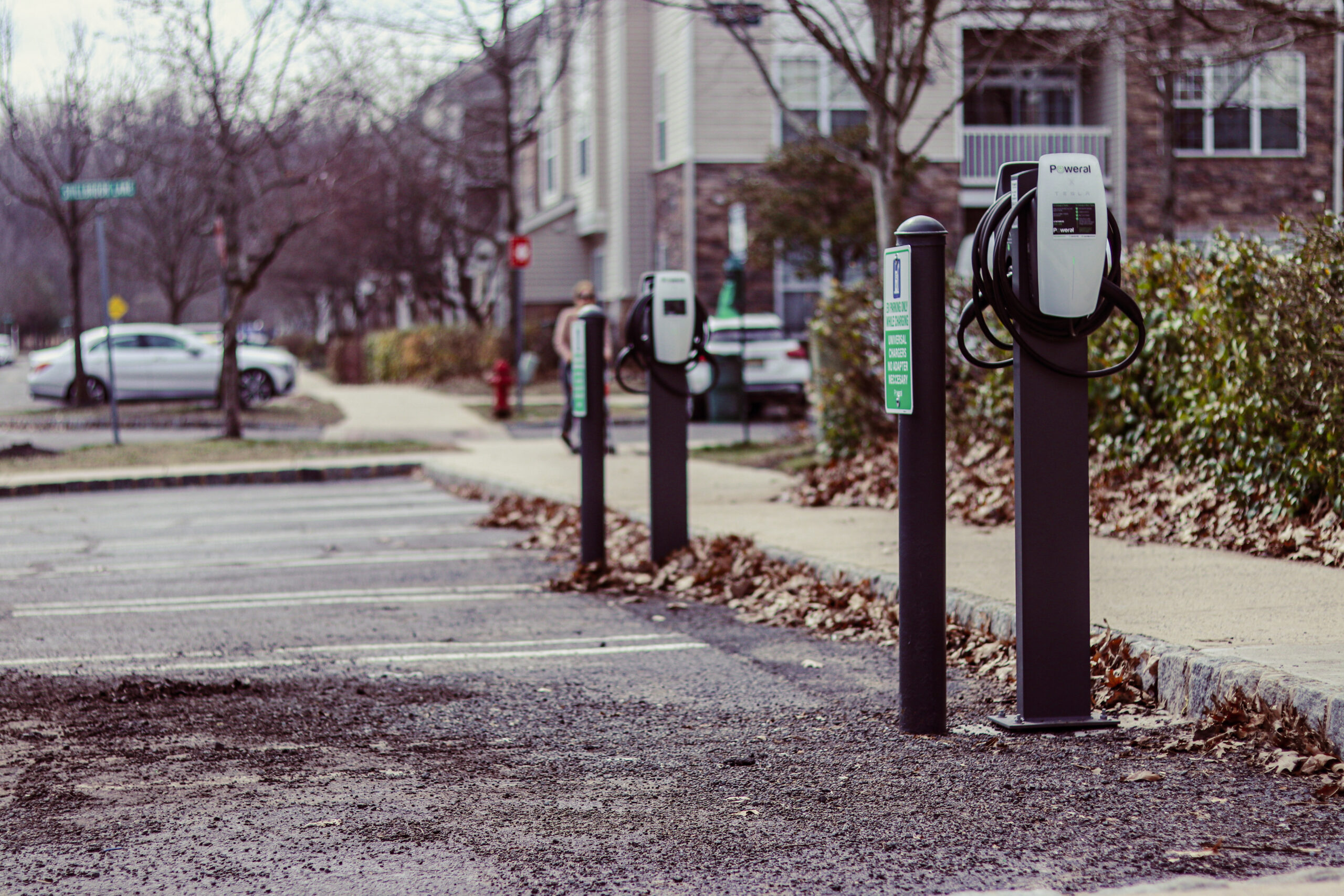
Most property owners who look into EV charging assume it’s a straightforward capital expense: buy the equipment, pay an electrician, done. It rarely works out that simply, and that’s actually good news, because there’s usually more help available than people expect. The tricky part is that it’s scattered across three different layers, state, and utility, and none of them advertise themselves particularly well.
Here’s what that landscape actually looks like, why it’s worth understanding even if you never fill out a single application yourself, and how the pieces fit together whether you’re comparing vendors or deciding whether to handle the process on your own.
Federal incentives
There is currently no federal grant or tax credit available for the type of EV charging installations Poweral does. A federal program exists on paper for alternative fuel refueling equipment, the Alternative Fuel Vehicle Refueling Property Credit, claimed through IRS Form 8911, but it does not currently apply to Poweral’s installation type. Property owners shouldn’t plan around a federal incentive for a project like this today.
There’s a second, separate tax angle worth knowing about. A property that purchases charging equipment outright, rather than through a no-cost installation model, may also be able to depreciate that equipment as business property under standard depreciation rules. That’s a conversation for your accountant, but it’s worth raising, since it’s a different lever than the credit itself and the two aren’t mutually exclusive.
State and utility programs
Utility make-ready programs
This is where things get genuinely regional. Many utilities offer what’s called a make-ready program, which covers some or all of the expensive electrical infrastructure work, the trenching, conduit, and panel upgrades, that usually costs more than the chargers themselves. These programs exist because the state requires and funds utilities to support EV charging buildout, not because it’s something a utility decides to do on its own.
State-level rebates and grants
Poweral is currently focused on the East Coast, and New York and New Jersey are the two states with confirmed program details today.
Here’s what’s actually available in each.
In New York, the main program runs through PSEG Long Island, which offers up to $6,500 per port for qualifying commercial installations. New York State also runs Charge Ready NY through NYSERDA, which covers the whole state and offers up to $3,000 per port, though it isn’t as consistently reliable as the PSEG Long Island program.
In New Jersey, the main program runs through PSE&G, offering up to $7,500 per port, with a maximum of 4 ports per project.
How the incentives stack
The utility make-ready allowance and state rebate above aren’t usually an either-or choice. A single project can often combine both, provided each program’s individual rules are met. The catch is that eligibility, paperwork, and timing requirements differ between them, and missing one detail on either can mean leaving money on the table or, worse, disqualifying the whole application.
Why Poweral clients often skip this process entirely
Here’s the part that actually matters to most property owners reading this: none of the above is something you have to navigate yourself if you go with a no-cost installation model. Poweral secures the incentives it qualifies for and covers the rest out of its own funds to install, operate, and maintain the chargers. You’re not filing paperwork, tracking application deadlines, or hoping a rebate comes through before your invoice is due.
That’s the core of Poweral’s grant and rebate application service: identifying which programs a specific property qualifies for and managing the applications directly, rather than leaving it to a property owner or their electrician to piece together.
The incentive research above is genuinely useful if you’re comparing vendors or just want to understand what you’re getting, but it’s not homework you have to do.
What this means if you’re comparing vendors
If a proposal you’re reviewing doesn’t already account for available incentives, one of two things is happening. Either the vendor hasn’t done the work to find them, which is worth asking about directly, or they have and just aren’t passing the savings through. Either way, it’s a fair question to ask before signing anything. It’s also worth asking whether the vendor’s installation process itself is designed around your property’s specific electrical capacity, since that affects which incentives even apply.
A realistic way to think about the timeline
One detail that trips people up: many incentive programs require pre-approval before equipment is purchased or installation begins, not after. That means the sequencing matters as much as the eligibility. A property owner who signs a vendor contract and orders equipment before checking incentive requirements can accidentally disqualify themselves from a program they would have otherwise qualified for. It’s one more reason this process tends to go smoother when someone is handling it full time rather than as a side task.
Common questions
Do incentives cover the full cost of installation?
Rarely on their own. State, and utility programs typically cover a portion, not the whole project, which is exactly why combining several of them, or working with a company that funds the rest itself, matters.
How do I know if my property is in an eligible utility territory?
This varies by utility, not just by state, so two buildings a few miles apart can qualify for different programs. It’s worth confirming directly rather than assuming based on your zip code alone.
What happens if a program runs out of funding after my project is already approved?
This does happen, which is part of why timing and a company that tracks program status closely matters more than the sticker number on any one rebate.
Can incentives be combined with a no-cost installation model?
Yes, and in practice this is the more common path for Poweral clients. The incentives reduce the total project cost, and Poweral covers what’s left, so the property owner’s out-of-pocket exposure stays at or near zero either way.
Do I need to apply for incentives before or after installation begins?
Before, in most cases. Pre-approval requirements are common enough that this should be one of the first questions on any project, not an afterthought once equipment is already on order.
What’s the difference between a rebate and a tax credit, practically speaking?
A rebate typically reduces the upfront cost or is paid out after the project is complete. A tax credit reduces what a business owes at tax time, which means it doesn’t help with cash flow during the project itself unless it’s paired with financing or a no-cost model that doesn’t require the property to front the cash in the first place.
If you’re weighing whether to handle this yourself or let someone else carry the paperwork, that’s worth a direct conversation. It also connects to two other decisions covered elsewhere on this site: which charger type actually fits your property, see the Level 2 vs. Level 3 comparison, and what the incentives above mean for your property’s value over time, covered in how EV charging affects property value. Reach out and we’ll walk through what your property actually qualifies for.
Sources
IRS – Alternative Fuel Vehicle Refueling Property Credit (Form 8911): https://www.irs.gov/credits-deductions/alternative-fuel-vehicle-refueling-property-credit
PSEG Long Island – EV Make Ready Program: https://www.psegliny.com/en/saveenergyandmoney/GreenEnergy/EV/MakeReady
NYSERDA – Charge Ready NY 2.0: https://www.nyserda.ny.gov/All-Programs/Charge-Ready-NY